Chrome extension · Design sprint
Chrome Focus Window
- Duration
- March – April 2020 (4-week design sprint)
- My role
- UX design, user research, and user testing, on a team of 4 designers
- Context
- A student design sprint sponsored by Google’s Digital Wellbeing team
- Tools
- Figma, Google Docs, Premiere Pro, Keynote

A concept for helping people stay focused while working in a browser: a focus session that silences notifications and organizes bookmarked tabs by subject, so one task at a time gets your full window.
The real problem
Interviewees told us the #1 source of distraction was irrelevant tabs: forgetting minimized tabs existed, losing tabs across windows, and never finding bookmarks when needed. Bookmarking exists, but as storage, not as a way of working. Layer in phone and laptop notifications, and the browser actively works against sustained attention.
The concept


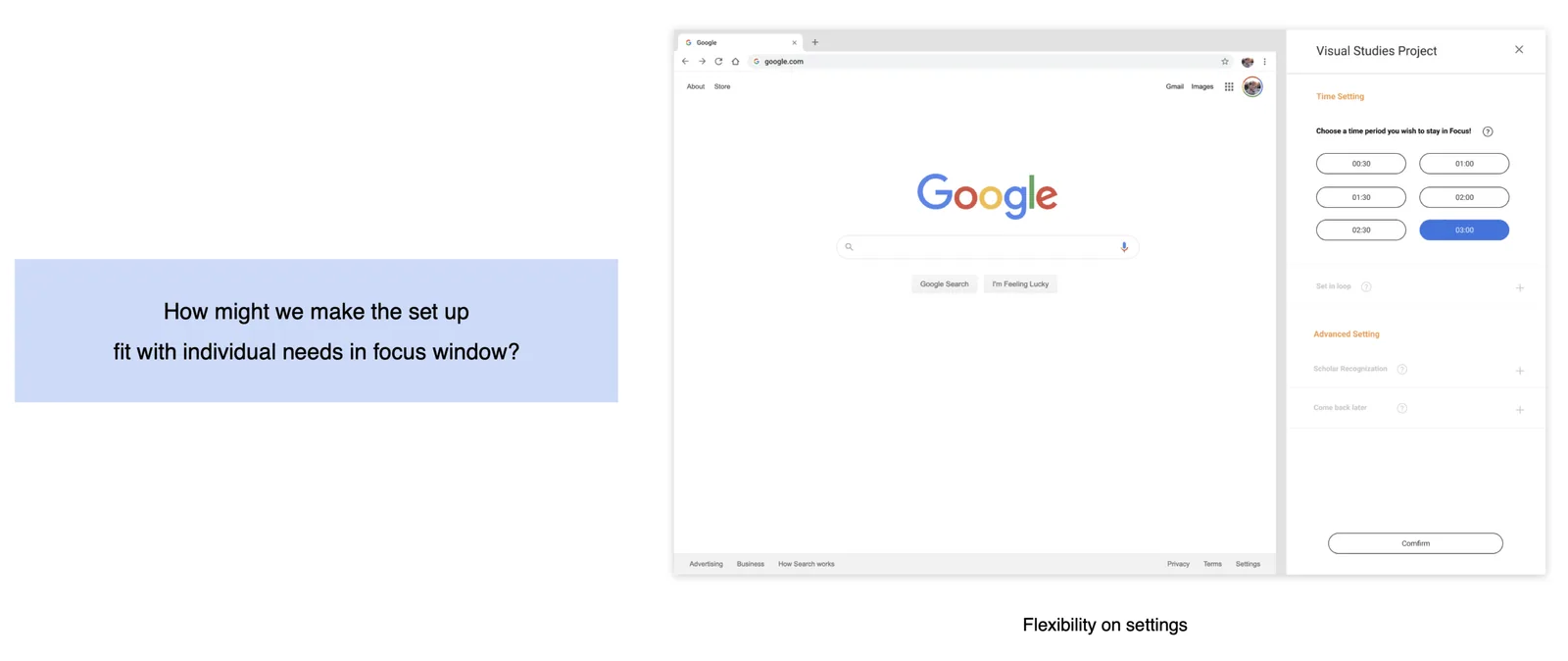
Focus Window starts you in a fresh browser (previous tabs stay put), lets you create subjects that organize bookmarks by project, and runs timed focus sessions during which notifications from phone and laptop are silenced. A minimizable panel keeps the browser clean while keeping your subject’s resources one click away.
Testing and what it changed
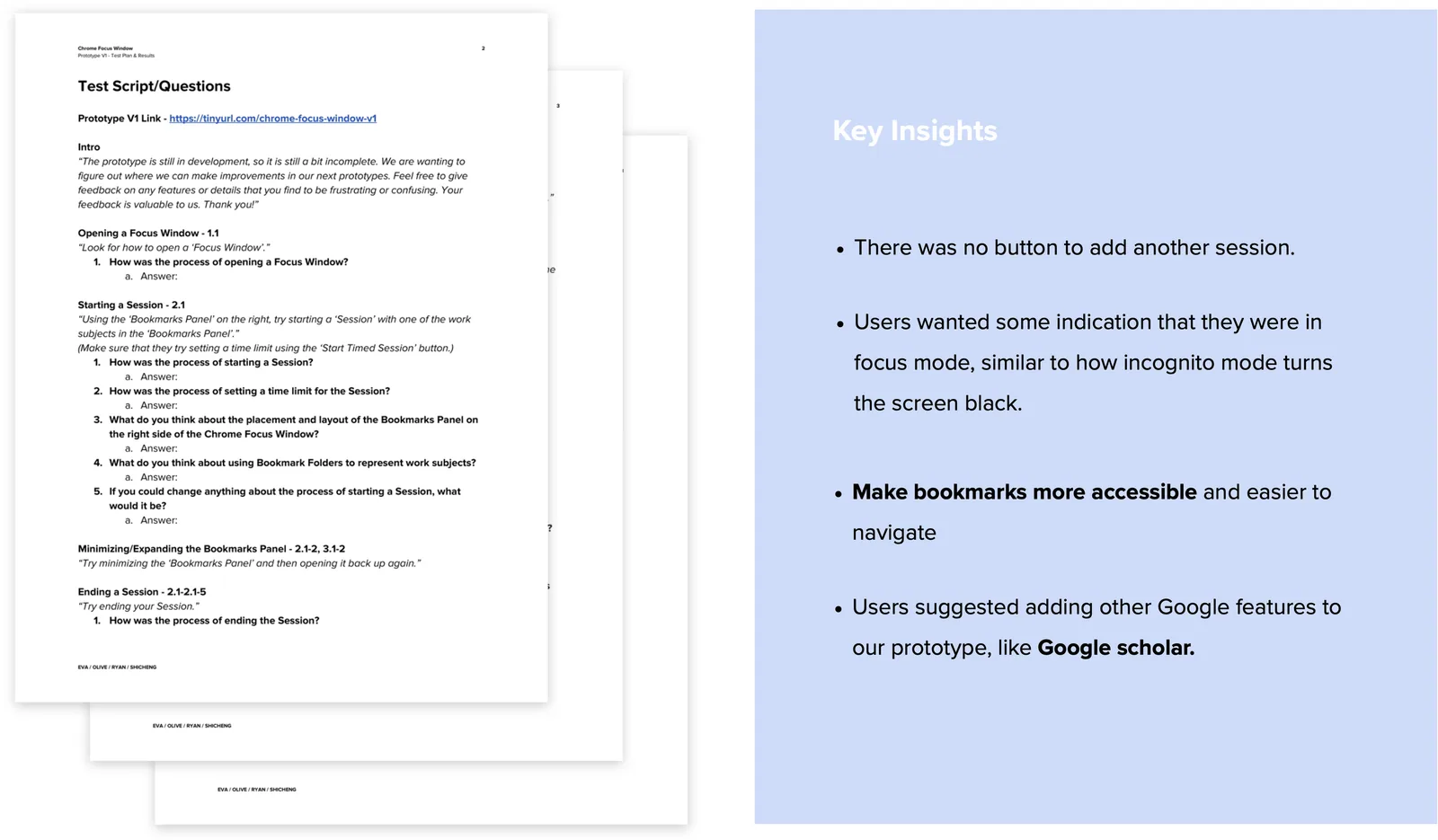
We built a V1 panel with timed sessions, resource wayfinding, and a minimized state, then tested it with 4 college students with loaded schedules, a small n, appropriate for a concept sprint, and enough to find the big problems: users needed more clarity and accessibility within their bookmarks, and more visibility that a focus session was active.
We also concept-tested three ways to pull users back on task: timer notifications, tabs reordering by time spent, and tabs growing by time spent. Timed notifications won decisively; the tab-manipulation concepts read as the browser misbehaving.
Those insights became the How-Might-We’s that drove the final iteration: increased session visibility and restructured bookmark access.
Reflection
If I’d had more time, I wanted to explore the ecosystem: Google Home playing focus music during sessions, Nest lights dimming as a session winds down, Assistant starting and stopping sessions. The sprint scoped to the browser; the behavior we were designing doesn’t stop there.